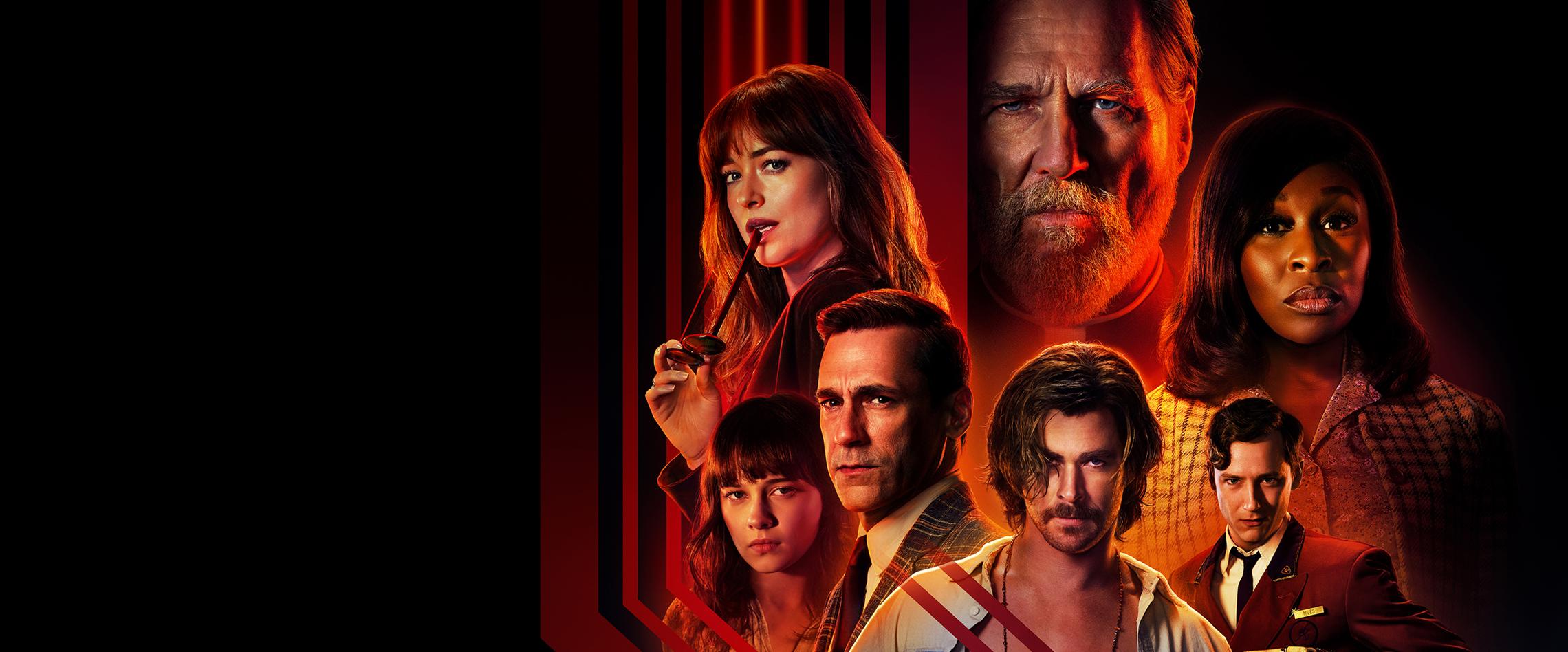
When Bad Times at the El Royale hit screens in 2018, it didn’t just arrive—it crashed into the Western genre like a bullet through a neon-lit diner window. Drew Goddard’s film fused neo-noir shadows with the dusty moral ambiguity of Spaghetti Westerns, wrapping it all in a darkly comedic bow that left audiences both stunned and laughing. The result wasn’t just a movie; it was a reinvention, a gritty love letter to outlaws, fate, and the rot beneath America’s golden facade. Every frame hums with tension, from the sepia-soaked streets of the titular hotel to the neon-lit rooms where secrets bleed into violence. This wasn’t your grandfather’s Western—it was a neon-drenched nightmare where redemption was a myth and every character was armed with more than just a gun.
The film’s genius lies in its refusal to play by genre rules. Here, the desert isn’t just a backdrop; it’s a character, as vast and indifferent as the characters who stumble through it. The El Royale Hotel, with its peeling paint and hidden corridors, becomes a labyrinth of betrayal, where every door hides a new layer of deceit. Meanwhile, the soundtrack—part Morricone, part modern dread—pulls the audience deeper into a world where laughter and gunfire are two sides of the same coin. But what makes Bad Times truly unforgettable is how it weaves these elements into a tapestry of human desperation. Whether it’s the tragicomedy of Dale and Milton’s doomed partnership or French’s chilling duality, the film forces viewers to confront uncomfortable truths: Are these people victims or villains? And does it even matter when the world they inhabit is rigged against them?
Thematic Exploration of Bad Times at the El Royale: A Dark Western Masterpiece
Bad Times at the El Royale (2018), directed by Drew Goddard, transcends conventional genre boundaries by weaving neo-noir, dark comedy, and Western into a cohesive narrative tapestry. This fusion creates a visually rich and thematically layered film that critiques human nature through the lens of fate, betrayal, and redemption. The film’s atmosphere is shaped by its genre-blending approach—neo-noir’s moral ambiguity and stylized aesthetics, dark comedy’s subversive humor, and Western’s themes of isolation and frontier justice—each element reinforcing the film’s exploration of existential despair and fleeting hope. The result is a modern Western that feels both nostalgic and eerily contemporary, where the decaying grandeur of the El Royale Hotel mirrors the psychological unraveling of its characters.
Genre Fusion: Neo-Noir, Dark Comedy, and Western Elements
The film’s neo-noir roots are evident in its moral ambiguity, unreliable narrators, and stylized visuals, particularly in scenes involving Miles (Jeff Bridges) and Darlene (Cynthia Erivo). The noir influence is most pronounced in the film’s treatment of betrayal and deception, where characters are trapped in cycles of manipulation, such as the infamous "I’m not a bad guy" monologue delivered by Miles, which underscores the film’s central theme of self-delusion. Dark comedy emerges through satirical dialogue and absurd situations, such as the hotel’s bizarre history of murders and the over-the-top villainy of the King brothers (Jon Hamm and Nick Offerman). Meanwhile, the Western elements—the desert setting, the lone gunman archetype, and themes of frontier justice—are reimagined through a modern lens, with Miles and Darlene embodying both the classic Western hero and antihero tropes.
The blending of these genres creates a unique tone: the gritty realism of a Western collides with the stylized cynicism of neo-noir, while dark comedy provides moments of levity that contrast sharply with the film’s bleak themes. This juxtaposition is critical to the film’s emotional impact, as it forces the audience to confront the absurdity of human behavior amidst a backdrop of violence and despair.
Core Themes: Betrayal, Fate, Redemption, and Isolation
The film’s narrative revolves around four interconnected themes, each explored through character arcs and narrative structure:
- Betrayal manifests in the broken trust between Miles and Darlene, as well as the hotel’s history of deception, symbolized by its hidden rooms and forgotten sins. The King brothers’ betrayal of their own family further emphasizes how betrayal is both a cause and consequence of the characters’ isolation. - Fate is a recurring motif, particularly in the film’s non-linear storytelling, where past and present collisions suggest that the characters are trapped in a cycle of violence they cannot escape. The hotel itself becomes a character, a living entity that predates and outlives its inhabitants, reinforcing the idea that fate is inescapable. - Redemption is explored through Darlene’s journey, as she seeks to escape her past and reclaim her agency. Her arc contrasts with Miles’ self-destructive tendencies, highlighting the film’s ambiguous stance on whether redemption is possible in a world defined by betrayal. - Isolation is both literal and psychological, evident in the desert setting and the hotel’s remote location. Characters are physically isolated but emotionally connected through shared trauma, creating a paradox where loneliness breeds both violence and unexpected solidarity.
The narrative structure reinforces these themes by fragmenting the timeline, forcing the audience to piece together the characters’ histories alongside them. This approach heightens tension and emphasizes the cyclical nature of their struggles.
Visual and Auditory Analysis: Aesthetic Reinforcement of Tone
The film’s visual and auditory design plays a crucial role in establishing its tone, with lighting, color palettes, and soundtrack working in tandem to create an immersive atmosphere.
- Lighting and Color Palettes: The film employs a dual aesthetic—sepia tones for flashbacks and neon contrasts for present-day scenes. Sepia tones evoke a nostalgic, almost mythic quality, suggesting that the past is both romanticized and cursed. In contrast, the neon-lit present feels sterile and artificial, reflecting the characters’ emotional detachment. For example, the red neon sign of the El Royale stands out against the desert’s muted colors, symbolizing the hotel’s role as a beacon of both salvation and damnation.
- Soundtrack and Score: The film’s score, composed by Christopher Lennertz, draws inspiration from Ennio Morricone’s spaghetti Westerns, blending eerie synths with acoustic instruments to create a sense of foreboding and melancholy. The soundtrack’s use of silence and sudden bursts of music mirrors the film’s non-linear pacing, while the desert wind and distant gunfire reinforce its Western roots. The lack of a traditional romantic score underscores the film’s cynical view of love and redemption.
Comparative Analysis: Bad Times at the El Royale vs. Classic Westerns and Neo-Noir
The following table contrasts Bad Times at the El Royale with three influential films—True Grit (1969), The Big Lebowski (1998), and Once Upon a Time in Hollywood (1997)—highlighting their genre, themes, visual style, and key influences:
Vintage color palettes, Hollywood glamour, period authenticity
Classic Hollywood cinema, 1960s Westerns, Tarantino’s style
While True Grit adheres to moral clarity and frontier justice, Bad Times at the El Royale subverts these tropes, presenting a world where redemption is elusive and fate is cruel. The Big Lebowski shares its dark comedy and absurdism, but El Royale grounds its humor in violence and tragedy, whereas Lebowski leans into satirical detachment. Once Upon a Time in Hollywood explores nostalgia and legacy, but El Royale uses its decaying hotel as a metaphor for the collapse of American dreams, blending historical and psychological depth.
The Symbolism of the El Royale Hotel: A Character in Its Own Right
The El Royale Hotel is more than a setting; it is a living, breathing entity that shapes the characters’ destinies. Its decaying grandeur, hidden rooms, and cursed history serve as a metaphor for the inescapable past and the weight of legacy.
- Decaying Grandeur: The hotel’s crumbling facade and opulent interiors reflect the contradictions of the American Dream—a place that was once a symbol of prosperity but now stands as a monument to failure and violence. The abandoned rooms and forgotten histories suggest that some sins cannot be buried, reinforcing the theme of inescapable fate.
- Hidden Rooms and Secrets: The hotel’s labyrinthine structure, particularly the hidden rooms and back alleys, mirrors the
Character Deep Dive: Archetypes, Motivations, and Iconic Performances in Bad Times at the El Royale
Bad Times at the El Royale thrives on its morally ambiguous characters, each embodying archetypes that challenge traditional Western tropes while delivering performances of raw intensity. The film’s five core protagonists—Dale, Milton, Bobby, French, and Emily—operate within a framework of contradictions, where innocence clashes with violence, loyalty fractures under pressure, and redemption remains perpetually out of reach. Their motivations stem from trauma, survival instincts, or fleeting ideals, while their flaws expose the fragility of human morality. The film’s genius lies in how these contradictions drive the plot, forcing characters into inevitable collisions that reflect the cyclical nature of violence and despair in the American frontier.
The psychological depth of the characters is further amplified by their backstories, which the film reveals through fragmented storytelling. Dialogue, visual cues, and subtle performances weave together a narrative where past and present merge seamlessly, creating a sense of fatalism. Supporting characters, though minor, serve as mirrors or catalysts, sharpening the protagonists’ edges. Meanwhile, the film’s dialogue—sharp, darkly comedic, and laced with subtext—reveals character dynamics with surgical precision, blending verbal irony with existential dread.
Archetypal Roles, Motivations, and Flaws of the Core Characters
The five central figures in Bad Times at the El Royale can be categorized into archetypes that subvert classic Western roles, redefining their purposes in a modern, cynical lens. Below is a structured breakdown of their archetypes, motivations, and inherent flaws, illustrating how their internal conflicts propel the narrative forward.
Archetype
Motivations
Flaws
Dale (The Reluctant Hero)Dale embodies the classic "man with no name" archetype but with a modern twist—he is neither a gunslinger nor a saint. His role is fluid, oscillating between protector and perpetrator, reflecting the moral ambiguity of the Western genre.
Seeks redemption for past sins, particularly his involvement in the murder of his brother.
Driven by a desire to escape his violent past and find a place of peace.
Protective instincts toward Emily and French, though his methods often exacerbate danger.
Unwilling to fully embrace violence despite being pulled into it.
His hesitation and moral conflict make him vulnerable to manipulation.
Stubbornness prevents him from admitting his complicity in the cycle of violence.
Idealism clashes with the brutal reality of the setting, leading to poor decisions.
Milton (The Charismatic Antagonist)Milton represents the corrupt charmer, a figure who thrives on chaos and control. His archetype aligns with the "trickster" but with a darker, more predatory edge, blending elements of the outlaw and the con artist.
Driven by a need to maintain control over the El Royale’s operations.
Seeks to eliminate threats (particularly Dale) to preserve his power.
Manipulates others through charm and intimidation, masking his ruthlessness.
Haunted by his own past, though he refuses to acknowledge it.
Overconfidence in his ability to outmaneuver others leads to reckless decisions.
His narcissism blinds him to the loyalty of those around him (e.g., Charlie).
Emotional detachment makes him incapable of genuine connection.
Bobby (The Loyal Enforcer)Bobby fits the archetype of the "loyal sidekick," but his role is twisted—he is both protector and executioner, reflecting the duality of loyalty in a lawless world.
Bound by loyalty to Milton, whom he sees as a father figure.
Driven by a desire to prove his worth and avoid abandonment.
Seeks redemption for past failures, particularly his inability to protect Milton in the past.
Struggles with his own violent tendencies but justifies them as necessary.
Blind loyalty to Milton clouds his judgment, making him a pawn in Milton’s games.
Internal conflict between his moral compass and his need for approval leads to instability.
His desperation for acceptance makes him emotionally manipulable.
French (The Ambiguous Innocent)French defies easy categorization. She is neither purely innocent nor purely villainous, embodying the "femme fatale" archetype while subverting expectations through her vulnerability and resilience.
Seeks escape from her abusive past and a chance at a normal life.
Driven by a desire to protect herself and those she cares about (initially Dale, later Emily).
Struggles with her own capacity for violence, oscillating between fear and defiance.
Represents the possibility of breaking free from cyclical trauma.
Her innocence makes her a target for exploitation by those like Milton.
Her emotional volatility leads to impulsive decisions with dire consequences.
Refusal to fully embrace her strength leaves her dependent on others.
Emily (The Tragic Survivor)Emily embodies the "orphaned child" archetype but with a matured edge, reflecting the resilience and cynicism of someone who has endured unimaginable loss. Her role is that of a catalyst, forcing the other characters to confront their own demons.
Driven by a quest for truth about her parents’ deaths and her own identity.
Seeks connection and belonging, though her guarded nature makes it difficult.
Determined to escape the fate of those who came before her.
Uses her intelligence and resourcefulness to navigate a world of violence.
Her need for answers blinds her to immediate dangers, leading to reckless behavior.
Emotional numbness prevents her from forming genuine bonds.
Her idealism about justice is naive in the face of systemic corruption.
These archetypes are not static; they evolve through the film’s events, with each character’s contradictions serving as the engine of the plot. Dale’s reluctance to embrace violence directly conflicts with Milton’s embrace of it, while French’s innocence is continually tested by the brutality around her. Emily’s search for truth becomes a mirror for the audience’s own desire to uncover hidden motives, reinforcing the film’s themes of deception and revelation.
Psychological Profiles: Dale and Milton’s Trauma and Collision
Dale and Milton are the film’s two most psychologically complex characters, their pasts colliding in a violent crescendo at the El Royale. Both men are products of trauma, but their responses to it define their roles in the narrative. Dale’s journey is one of reluctant acceptance, while Milton’s is a descent into self-destructive control.
Dale (Jeff Bridges): The Reluctant Sinner Dale’s backstory is pieced together through dialogue, visual cues, and his interactions with others. He is revealed to be a former member of a biker gang, implicated in the murder of his brother, Earl. His decision to flee and seek refuge at the El Royale is an attempt to outrun his past, but the hotel’s history—and his own actions—ensure that he cannot escape
Behind the Scenes: Production Design, Cinematography, and Directorial Vision in Bad Times at the El Royale
Bad Times at the El Royale (2018) emerged as a visual and narrative fusion of classic Westerns, neo-noir, and modern crime storytelling, with its aesthetic heavily influenced by director Drew Goddard’s meticulous attention to production design and cinematography. The film’s stark, atmospheric visuals were not merely decorative but integral to its themes of moral ambiguity, nostalgia, and cyclical violence. Achieving this required overcoming logistical challenges—particularly filming in the Nevada desert—while crafting a world that felt both hyper-realistic and dreamlike. The result was a cinematic language that communicated tension, decay, and rebirth through composition, lighting, and movement long before dialogue entered the frame.
Filming Challenges and Location Selection: The Nevada Desert as a Character
The Nevada desert, with its vast, desolate landscapes, served as the film’s primary setting, chosen for its ability to embody the themes of isolation, rebirth, and decay. However, filming in such an environment presented significant challenges, including extreme temperatures, limited infrastructure, and the need to create a cohesive aesthetic across disparate locations. The El Royale’s exterior, for instance, was shot in Pahrump, Nevada, where the abandoned motel’s peeling paint and rusted signage were preserved to amplify the film’s sense of decay. Goddard and production designer K.K. Barrett deliberately selected locations that felt both authentic to the 1969 setting and symbolically resonant—such as the Black Rock Desert, which doubled for the film’s climactic showdown, evoking the vastness of the American frontier while reinforcing themes of existential confrontation.
The crew encountered practical obstacles, including sandstorms that obscured visibility and logistical delays due to remote access, but these were embraced as part of the film’s gritty realism. Barrett explained that the production avoided digital enhancements to maintain the locations’ raw, unfiltered quality, even when scenes required multiple takes. The desert’s natural light, though unpredictable, became a storytelling tool—its harsh glare mirroring the characters’ moral dilemmas, while its golden hour hues underscored moments of fleeting hope. The contrast between the motel’s artificial glow and the desert’s natural darkness further emphasized the film’s duality: a place where modernity and myth collide, where violence and redemption coexist.
Shot-by-Shot Analysis of the Opening Sequence: Establishing Mood Through Visual Storytelling
The opening sequence of Bad Times at the El Royale—a 7-minute silent prologue—serves as a masterclass in visual storytelling, using long takes, tracking shots, and framing to establish the film’s tone without dialogue. The sequence begins with a static wide shot of the motel at dusk, its neon sign flickering weakly against the encroaching darkness. As the camera pushes in toward the lobby, the composition isolates key details: a bloodstained towel, a half-empty whiskey bottle, and a revolver on the counter—each element hinting at the violence to come.
The sequence’s most iconic shot is a slow tracking shot through the motel’s hallway, where the camera moves parallel to a character’s perspective, revealing hidden details (a bullet hole in a door, a faded photograph) that foreshadow the narrative. The use of deep focus ensures that both foreground and background remain sharp, reinforcing the film’s theme of interconnected fates. Goddard’s direction prioritized practical camera movement over CGI, with the crew using Steadicam and dolly shots to create fluid, immersive transitions. The absence of dialogue forces the audience to read subtext through visual cues, from the shadows stretching unnaturally long (symbolizing moral ambiguity) to the flickering neon sign (a metaphor for the characters’ unstable lives).
The prologue’s final shot—a sudden cut to black followed by the sound of a gunshot—demonstrates how sound design and silence work in tandem with visuals. The sequence’s restraint mirrors the film’s central tension: what is seen is never the whole story.
Visual Influences: Neo-Noir, Spaghetti Westerns, and Modern Crime Thrillers
Bad Times at the El Royale synthesizes influences from neo-noir cinematography, Spaghetti Westerns, and modern crime thrillers, each contributing to its distinct visual identity. The film’s high-contrast lighting and morally ambiguous characters draw heavily from neo-noir, particularly Roman Polanski’s Chinatown (1974) and William Friedkin’s The French Connection (1971), where shadows and composition obscure truth. The Dollars Trilogy (1964–1966) by Sergio Leone influenced the film’s desert landscapes and stylized violence, while Corman’s Poe films (particularly The Masque of the Red Death) inspired the motel’s claustrophobic, gothic atmosphere.
Cinematographer Sean Porter employed wide-angle lenses to exaggerate depth and distortion, a technique borrowed from Spaghetti Westerns to emphasize the vastness of the desert and the isolation of the characters. Meanwhile, the handheld camerawork in tense sequences (such as the saloon brawl) echoes modern crime thrillers like No Country for Old Men (2007), where instability reflects the characters’ moral instability. Goddard’s direction blended these influences seamlessly, ensuring that each visual choice—whether a low-angle shot of a character (to convey power) or a Dutch angle (to signify disorientation)—served the narrative’s psychological depth.
Lighting Techniques: Natural vs. Artificial Light in Narrative Shaping
Lighting in Bad Times at the El Royale is a narrative tool, with natural and artificial sources used to differentiate emotional states and time periods. The following table illustrates key lighting choices and their purposes:
Scene
Light Source
Purpose
Example Shot
The motel lobby at night
Neon sign + practical lamps (warm yellow/orange)
Creates a false sense of safety; the glow contrasts with the desert’s darkness, symbolizing the motel as a deceptive sanctuary.
A low-angle shot of the lobby, where the neon sign’s reflection distorts the characters’ faces, hinting at their hidden motives.
Desert exteriors during day
Natural sunlight (harsh, high-contrast)
Emphasizes isolation and exposure; the unfiltered light mirrors the characters’ unmasked vulnerabilities.
The tracking shot of Miles driving through the desert, where the sun’s glare obscures his vision—mirroring his loss of control.
Evokes cold, inevitable fate; the artificial lights feel unnatural and oppressive, mirroring the characters’ trapped destinies.
A wide shot of the two antagonists standing back-to-back, illuminated by dueling spotlights, creating a symmetrical, almost balletic tension.
The deliberate contrast between warm tones (nostalgia, memory) and cold blues (tension, danger) reinforces the film’s duality. Porter achieved this through color grading in post-production, ensuring that even
Cultural Impact and Legacy: How Bad Times at the El Royale Redefined Modern Westerns
The Western genre has long been a cornerstone of American cinema, evolving from John Ford’s sweeping epics to the gritty, morally ambiguous narratives of modern filmmakers. Bad Times at the El Royale (2018) emerged as a pivotal bridge between these eras, redefining the Western through a neo-noir lens while retaining its core themes of isolation, fate, and violence. Directed by Drew Goddard, the film challenged traditional genre conventions by blending psychological depth, dark humor, and nonlinear storytelling—elements that resonated deeply with audiences and critics alike. Its cultural impact extends beyond box office numbers, influencing subsequent films and TV series that sought to merge the Western’s mythic grandeur with contemporary storytelling techniques.
The film’s reception underscored its significance as a genre hybrid, earning widespread acclaim for its atmospheric tension, sharp dialogue, and ensemble cast. Its legacy lies not only in its critical success but also in its ability to spawn a dedicated cult following, fan theories, and even merchandising that cemented its place in pop culture. By examining its historical context, audience metrics, box office performance, and broader influence, Bad Times at the El Royale reveals itself as a defining work that reimagined the Western for a new generation.
Historical Context: The Western’s Evolution and Bad Times as a Genre Bridge
The Western genre has undergone several transformations since its inception in the 19th century. Early silent films depicted cowboys and frontier life as heroic and idealized, while the 1950s saw a shift toward more complex narratives, exemplified by films like High Noon (1952), which explored themes of moral ambiguity and societal pressure. The 1970s brought the revisionist Western, with directors like Sergio Leone and Sam Peckinpah introducing violence, existentialism, and antiheroes (The Good, the Bad and the Ugly, The Wild Bunch). By the 2000s, the genre had fragmented further, with neo-noir Westerns like No Country for Old Men (2007) and True Grit (2010) blending traditional elements with modern storytelling.
Bad Times at the El Royale occupies a unique position in this evolution. It synthesizes the psychological depth of neo-noir with the mythic storytelling of the Western, while incorporating the nonlinear structure of contemporary films like Pulp Fiction (1994) and Memento (2000). The film’s setting—a secluded desert hotel—serves as a microcosm for the genre’s themes, trapping its characters in a space where past and present collide. This approach allowed Goddard to explore themes of fate, identity, and violence without relying on the expansive landscapes of classic Westerns. The result was a film that felt both nostalgic and entirely modern, appealing to audiences who craved the genre’s mythos without its traditional trappings.
Audience Reception and the Cult Following of Bad Times at the El Royale
Upon its release, Bad Times at the El Royale garnered immediate critical praise, with audiences and critics alike lauding its bold narrative structure, atmospheric cinematography, and standout performances. The film holds a 92% approval rating on Rotten Tomatoes, based on 223 reviews, with the consensus stating: "A stylish, suspenseful neo-Western with a killer soundtrack and a stellar cast, Bad Times at the El Royale is a darkly entertaining ride." On IMDb, it maintains a 7.2/10 score, reflecting its strong fanbase and word-of-mouth growth. The film also premiered at the Toronto International Film Festival (TIFF) 2018, where it received positive buzz, further fueling its initial reception.
The film’s cult following grew significantly post-release, driven by its nonlinear storytelling, which encouraged repeat viewings to piece together its mysteries. Fan theories proliferated on platforms like Reddit and YouTube, with discussions centering on character backstories, hidden clues, and the film’s ambiguous ending. Social media engagement, particularly on Twitter and TikTok, amplified its reach, with memes and deep-dive analyses becoming viral. The film’s Netflix release in 2019 also played a crucial role in its longevity, making it accessible to global audiences and solidifying its status as a modern cult classic.
Box Office Performance and Marketing Strategies Compared to Neo-Noir/Western Hybrids
Bad Times at the El Royale had a modest but strategic theatrical release, debuting in limited theaters (480 screens in North America) before expanding. Its domestic gross was $12.5 million, a respectable figure for an indie film with a niche appeal. However, its worldwide gross reached $28.5 million, indicating strong international interest, particularly in markets where neo-noir and Western films have dedicated fanbases. When compared to other neo-noir/Western hybrids, its performance was competitive yet distinct:
- Hell or High Water (2016): Grossed $25.9 million domestically, benefiting from a stronger marketing push tied to its star power (Jeff Bridges, Chris Pine). Its focus on a heist narrative also aligned with contemporary crime thriller trends. - The Hateful Eight (2015): Earned $155 million worldwide, driven by Quentin Tarantino’s brand and its controversial, dialogue-heavy structure. Its theatrical release was far broader (3,000+ screens), leveraging Tarantino’s cult following. - True Grit (2010): Grossed $173 million worldwide, with a traditional Western appeal that attracted broader audiences, including families.
Bad Times at the El Royale’s marketing strategy relied heavily on mystery and atmosphere, with trailers emphasizing its nonlinear storytelling and dark humor. Netflix’s later acquisition and global distribution ensured its longevity, allowing it to accumulate a dedicated audience over time. Unlike its competitors, the film’s success was not tied to a single marketing hook but rather to its word-of-mouth buzz, which grew organically through fan theories and critical acclaim.
Influence on Later Films and TV: Blending Violence, Dark Humor, and Nonlinear Narratives
The impact of Bad Times at the El Royale on modern storytelling is evident in its influence on subsequent films and TV series that prioritize genre-blending, moral ambiguity, and stylized violence. Its use of dark humor to offset tension and nonlinear timelines to deepen character arcs has become a hallmark of contemporary crime and Western narratives. Notable examples include:
- Yellowstone (2018–present): The FX series adopts the Western’s themes of power, family, and violence but infuses them with the psychological depth and dark humor reminiscent of El Royale. Episodes like "The Longest Day" (Season 1) and "The Blood Is the Life" (Season 2) feature nonlinear storytelling, mirroring the film’s structure. - The Son (2019–2022): This HBO drama explores family secrets and generational trauma in a Western setting, with a nonlinear narrative that rewards repeat viewings—a direct nod to El Royale’s approach. - Ozark (2017–2022): While primarily a crime drama, the show’s blend of violence, dark humor, and morally gray characters aligns with El Royale’s tone. The nonlinear flashbacks in later seasons further echo the film’s narrative techniques. - The Harder They Fall (2021): This neo-Western revenge tale, directed by Jeymes Samuel, draws inspiration from El Royale’s stylized violence and atmospheric tension, though it leans more into historical fantasy.
Beyond film and TV, the influence of Bad Times at the El Royale extends to independent cinema, where filmmakers continue to experiment with genre hybrids. Its success proved that Westerns could thrive without relying on traditional tropes, paving the way for films like The Power of the Dog (2021) to redefine the genre through psychological depth and visual storytelling.
Key Awards and Recognition Validating Genre-Blending Ambition
Bad Times at the El Royale received several awards and nominations that highlighted its innovative storytelling and genre fusion. While it did not secure major Academy Award nominations, its recognition in indie film circles and genre-specific awards underscored its significance:
- Saturn Awards (2019): - Best Thriller Film (Nominated) - Best Supporting Actress (Adelaide Kane, for her role as Emily Summers) - Best Make-Up (for its distinctive, character-defining prosthetics) The nominations reflected its atmospheric tension and visual flair, key elements of its neo-noir Western identity.
- Indie Film Festival Highlights: - Toronto International Film Festival (TIFF 2018): Premiered in the Special Presentations section, generating
Interactive Fan Engagement: Deepening the Bad Times at the El Royale Experience
Bad Times at the El Royale transcends its status as a dark Western through its layered storytelling, ambiguous narrative, and rich character dynamics. To fully immerse fans in its intricate world, interactive engagement tools—such as trivia quizzes, script analysis exercises, and theory-building prompts—transform passive viewing into active participation. These activities not only reinforce thematic depth but also encourage creative reinterpretation, fostering a community-driven exploration of the film’s mysteries. From dissecting dialogue for hidden clues to reconstructing pivotal scenes in alternative formats, these exercises align with the film’s meta-narrative style, where perception shapes reality.
Trivia Quiz: Dialogue, Easter Eggs, and Behind-the-Scenes Secrets
The film’s script is dense with deliberate ambiguities, hidden references, and production anecdotes that reward close attention. This 10-question trivia quiz tests knowledge of dialogue nuances, Easter eggs, and behind-the-scenes trivia, designed to challenge even the most devoted fans. Answers are provided in a separate column to facilitate group discussions or self-assessment.
Question
Answer
1. What is the significance of the phrase "Bad times at the El Royale" when first spoken by Dale?
It mirrors the film’s title, but Dale uses it sarcastically to describe the motel’s atmosphere before the chaos begins. The repetition later becomes a motif for the cyclical violence in the story.
2. Which historical event is referenced in the film’s opening text crawl, and how does it connect to the Stranger’s backstory?
The 1959 Munich Massacre (not the 1972 event) is mentioned. The Stranger’s past as a Mossad operative is hinted at through his knowledge of the event, tying into his role as a morally ambiguous enforcer.
3. What real-life location inspired the El Royale’s design, and which director demanded specific architectural details?
The Motel California from the Easy Rider (1969) and Route 66 diners served as visual inspirations. Director Drew Goddard insisted on a 1950s Americana aesthetic with hidden rooms and labyrinthine hallways to reflect the film’s themes of deception.
4. What object does French repeatedly handle during the motel confrontation, and what does it symbolize?
A deck of cards, specifically the Ace of Spades. It symbolizes his role as a gambler and trickster, as well as the film’s obsession with luck and fate. The card also appears in the Stranger’s hand during the shootout, linking their fates.
5. Which actor improvised the line "I don’t know what’s worse—being a monster or being a victim"?
Jeffrey Wright (Milton) delivered the line ad-lib during takes, capturing the character’s moral conflict between vengeance and redemption. The improvisation was kept in the final cut.
6. What is the hidden meaning behind the blue door in the motel hallway?
The blue door leads to a storage room, but its color contrasts with the otherwise warm tones of the motel, symbolizing isolation and hidden truths. Fans theorize it represents Milton’s suppressed trauma or a portal to another dimension.
7. Which song plays during the Stranger’s final confrontation with French, and what is its significance?
"Red Red Wine" by UB40. The song’s ironic juxtaposition with the violent scene underscores the film’s dark humor and the characters’ self-destructive tendencies.
8. What is the name of the fake name Dale uses when registering at the motel, and why is it ironic?
He uses "Billy Lee"—a nod to Billy the Kid, reinforcing his outlaw archetype. The irony lies in his eventual failure to escape his past, mirroring classic Western tropes.
9. Which director of photography was responsible for the film’s high-contrast lighting, and what technique did they employ?
Sean Porter used practical lighting (e.g., neon signs, flickering bulbs) and low-key chiaroscuro to emphasize shadows as characters, a hallmark of film noir influences.
10. What is the real identity of the character "The Stranger," as revealed in the film’s ambiguous ending?
The film deliberately avoids a clear answer, but theories suggest he is either:
A former ally of Milton’s (implied by their shared past in the text crawl).
A psychopathic hitman hired to clean up the motel’s mess.
A manifestation of Milton’s guilt, embodying his desire for vengeance.
The ambiguity reinforces the film’s meta-narrative style.
Script Analysis Exercises: Rewriting Scenes from Alternative Perspectives
The film’s nonlinear storytelling and unreliable narration invite readers to recontextualize key moments through different lenses. These exercises encourage creative rewrites of pivotal scenes, focusing on dialogue, pacing, and character motivation. For example, the shootout in the motel lobby—typically experienced through Dale’s POV—can be reimagined from the perspective of a bystander, a child, or even the motel’s ghostly presence. Below are structured prompts to guide the process:
Key Scenes for Rewriting:
1. The Motel Confrontation (French vs. Milton)
Rewrite the scene from Dale’s hidden vantage point in the hallway, emphasizing his paranoia and helplessness.
Experiment with silent film intertitles to convey tension without dialogue.
2. The Stranger’s Arrival
Describe his entrance from the perspective of the waitress at the diner, highlighting her unspoken attraction and fear.
Use stream-of-consciousness narration to reflect her internal conflict between morality and survival.
3. The Hidden Room Discovery
Reconstruct the scene as a graphic novel panel, focusing on visual storytelling (e.g., shadows, distorted reflections).
Add a narrative voiceover from an unknown third party (e.g., a journalist or a future guest) piecing together clues.
4. The Final Standoff
Write the scene from Milton’s perspective, blending flashbacks of his past with the present moment to show his psychological unraveling.
Tips for Effective Rewrites: - Adapt tone: Shift from the film’s stylized violence to a grittier or more poetic approach. - Incorporate multimedia: Use sound design descriptions (e.g., "the hum of a refrigerator drowning out gunshots") to enhance immersion. - Challenge canon: Introduce new characters or motives that align with the film’s themes (e.g., corruption, fate, or redemption).
Fan-Made Theories and Prompts for Original Speculation
Practical Applications: Writing, Filmmaking, and Creative Work Inspired by Bad Times at the El Royale
Bad Times at the El Royale masterfully blends neo-noir tension with the gritty atmosphere of a Western, creating a template for storytelling that transcends traditional genre boundaries. Its non-linear structure, morally complex characters, and visually striking aesthetic offer a blueprint for writers and filmmakers aiming to craft narratives that feel both nostalgic and subversively modern. Below are actionable strategies to adapt these techniques into original works, whether in scriptwriting, visual storytelling, or cross-media adaptations.
Writing a Neo-Noir Script with a Western Twist: Step-by-Step Guide
Structuring a Non-Linear Plot with Three Act Beats The film’s fragmented timeline—alternating between past and present—serves as a narrative device to deepen character arcs and heighten suspense. To replicate this structure: - Act 1 (Past/Present Intercut): Introduce the protagonist in two timelines simultaneously (e.g., Miles in 1969 and 2015). Use a pivotal scene (e.g., the hotel’s opening night) to anchor both eras. - Act 2 (Convergence): Gradually weave the timelines together through shared locations (e.g., the hotel’s lobby, the diner) or recurring motifs (e.g., the "Bad Times" sign, the ghostly piano player). Introduce the central mystery (e.g., the hotel’s dark history) midway, ensuring it escalates tension. - Act 3 (Resolution): Resolve the mystery through a climactic confrontation that ties both timelines together (e.g., Miles’ confrontation with the past in the present). End with an ambiguous twist—leaving room for interpretation.
Crafting Morally Ambiguous Characters with Clear Motivations Characters like Miles, Darlene, and the Antler John are defined by contradictions: Miles is both a thief and a protector; Darlene is vengeful yet sympathetic. To achieve this: - Define Core Flaws and Virtues: Assign each character a defining trait (e.g., Miles’ loyalty vs. his impulsiveness) and a hidden desire (e.g., Darlene’s quest for redemption). Use backstory to justify their actions without excusing them. - Motivations Through Action: Avoid exposition. Reveal motivations through dialogue, visual cues, or symbolic actions (e.g., Miles’ refusal to leave the hotel despite danger). - Subvert Expectations: Give characters goals that conflict with their morality (e.g., a sheriff who turns to crime, a criminal who seeks justice). Example:
"The sheriff’s badge isn’t a symbol of authority—it’s a weapon he uses to manipulate the town. His final act of violence isn’t against the outlaw but against the system that corrupted him."
Using Dialogue to Reveal Subtext The film’s dialogue is sparse but layered, often hiding threats, desires, or past traumas beneath polite conversation. Techniques include: - Double Meanings: Have characters say one thing while implying another (e.g., "You’re not the first to ask about the past" could mean curiosity or warning). - Silence and Pauses: Use unspoken words to build tension. Example:
Miles: "You ever think about leaving this place?"
Darlene: (beat) "Not since I found out what’s buried under the floorboards."
- Anachronisms and Code: Incorporate modern phrases or slang into period dialogue to hint at hidden connections (e.g., a 1969 character using a term from 2015).
Filmmaking Checklist for Achieving the El Royale’s Visual Style
Location Scouting for Decaying Americana The film’s aesthetic hinges on locations that feel both timeless and haunted. Prioritize: - Architectural Details: Seek buildings with peeling paint, rusted fixtures, and uneven floors. Examples include: - Hotels: Look for structures with grand facades hiding crumbling interiors (e.g., the Hotel del Coronado in California or The Stanley Hotel in Colorado). - Diner and Gas Stations: Choose retro establishments with flickering neon signs, sticky booths, and vintage menus. - Desert and Mountain Roads: Use locations with stark landscapes—dry lake beds, abandoned mines, or winding highways—to emphasize isolation. - Lighting Tests: Scout locations at golden hour (sunset/sunrise) to capture the film’s signature high-contrast lighting. Avoid locations with modern intrusions (e.g., power lines, cell towers).
Lighting Setups for High-Contrast Scenes The El Royale’s visual palette is defined by chiaroscuro lighting, where shadows obscure details and create mood. Key setups: - Key Light: Use a single hard light source (e.g., a desk lamp, neon sign) to cast deep shadows. Position it at a 45-degree angle to the subject’s face. - Fill Light: Introduce minimal fill light (e.g., a practical bulb or reflector) to avoid silhouetting characters entirely. Aim for a ratio of 4:1 (key to fill). - Backlighting: Add a rim light (e.g., a practical window or LED panel) to separate characters from the background. Example:
"In the diner scene, the waitress is lit from below by a flickering bulb, casting her face in shadow while the neon ‘OPEN’ sign behind her glows like a halo—symbolizing her trapped fate."
- Color Temperature: Use warm tones (2800K–3200K) for interior scenes and cooler tones (5600K) for exterior shots to create contrast.
Sound Design to Emphasize Isolation Sound in Bad Times amplifies the film’s claustrophobic atmosphere. Techniques include: - Layered Ambience: Combine practical sounds (e.g., creaking floors, distant car engines) with subtle electronic textures (e.g., white noise, reversed audio). - Selective Silence: Use moments of absolute quiet to heighten tension before a sudden noise (e.g., a gunshot, a door slamming). - Diegetic Sound Tricks: - Wind: Record or synthesize wind to mask dialogue or create unease. Vary intensity—gentle breezes in calm scenes, howling gusts during confrontations. - Distant Gunshots: Use subtle, muffled gunfire to imply violence off-screen, reinforcing the hotel’s violent history. - Piano and Jukebox: Incorporate out-of-tune or looping music to evoke nostalgia and dread. Example:
"The jukebox plays ‘Bad Times’ on repeat, but the needle skips every time the camera cuts away—symbolizing the inescapability of the past."
Pre-Visualization Template for a Short Film Inspired by El Royale
Storyboard Thumbnails and Keyframe Descriptions Below is a text-based template for a 5-minute short film titled "The Last Room at the El Royale", focusing on a lone traveler uncovering a secret in the hotel’s attic.
Scene 1: Arrival (Night, 2015) - Thumbnail: A 1950s sedan pulls onto a dirt road, headlights cutting through fog. The El Royale sign flickers in the distance. - Keyframes: - Frame 1: Wide shot of the car approaching the hotel. Windshield wipers obscure the view. - Frame 2: Close-up of the hotel’s lobby, shadows stretching across the check-in desk. A ledger lies open on the counter. - Frame 3: POV shot of the traveler (a journalist) picking up the ledger. Pages are filled with names crossed out in red ink.
Scene 2: The Attic (Interior, High-Contrast Lighting) - Thumbnail: A spiral staircase leading to a trapdoor. Dust motes float in a beam of light. - Keyframes: - Frame 1: Low-angle shot of the traveler climbing the stairs. Each step creaks ominously. - Frame 2: The attic reveals a room with a single bed, a typewriter, and a wall of framed photographs. The camera lingers on a photo of a woman (Darlene) holding a gun. - Frame 3: The traveler finds a box labeled "Property of the El Royale." Inside: a revolver and a key.
Scene 3: Confrontation (Diner, Night) - Thumbnail: The traveler sits in a booth across from a shadowy figure (Antler John). A jukebox plays "Bad Times." - Keyframes: - Frame 1: Wide shot of the diner. The only light comes from a flickering bulb and the jukebox. - Frame 2: Close-up of hands exchanging the key for a piece of paper. The traveler’s hands shake
Bad Times at the El Royale endures not just as a film, but as a cultural Rorschach test—its neon and shadow playing tricks on audiences who see their own moral ambiguities reflected in its cracked mirror. The movie’s legacy isn’t just in its genre-blending audacity or its razor-sharp dialogue, but in how it dared to ask: What if the Wild West never really ended? What if the outlaws were still out there, not riding into the sunset, but checking into a hotel where the walls whisper secrets and the coffee is always laced with poison? From its non-linear storytelling that keeps viewers guessing to its visual poetry of decay and neon, the film remains a masterclass in how to make a Western feel fresh, dark, and utterly modern. Decades from now, when the El Royale’s final room collapses into dust, the questions it asked—and the laughs it stole—will still echo like gunshots in an empty canyon.


Leave a Comment
Comments are moderated before appearing. The data you submit is processed according to the Privacy Policy of Vetlife Archive.